

Executive Chairman of the Economic and Financial Crimes Commission, EFCC, Ola Olukoyede has called for collective responsibility in the anti-corruption fight, for the effort to be successful. He made this known in Abuja on March 6, 2024, at the Commission’s headquarters when he received a team from the Nigerian Institute of Public Relations (NIPR), on a courtesy visit. “As an Agency, our mandate is to fight economic and financial crimes and there is no way you will be successful in this fight without public engagement. “I see Nigerians looking at this fight as a fight between EFCC and the rest of Nigerians or between ICPC or any other relevant Agency and the rest of Nigerians. As long as we continue on that particular note, there is no way we will make progress”, the EFCC Chairman said. Olukoyede appreciated the NIPR’s commitment to nation-building and called for greater effort towards public awareness and sensitization concerning the menace of corruption, maintaining that publicity and collective responsibility are crucial to achieving success. President of the NIPR, Dr. Ike Neliaku was accompanied on the visit by General Sani Usman Kukasheka, Chief Uzoma Onyegbadue, Dr. Ahmad Sajoh, Mrs Chinwe Ogbuka, Mrs. Tiwalade Fapohunde, Aisha Gambari and Stanley Ogadigo. A statement signed by EFCC’s Head, Media & Publicity, Dele Oyewale disclosed that the NIPR President sought the partnership and support of the EFCC in the execution of the institute’s programmes, including Nigerian Reputation Fair, and Anti-Corruption and Consumer Protection Hub.

WAMAC’s Moving Train on Anti-Corruption Brings Bottom-Up Approach to Kwara
A Town Hall Meeting of development stakeholders in Kwara State, North-Central Nigeria has advocated for communities to be monitoring projects, especially “Constituency Projects”, and report any discrepancy to the anti-corruption agencies. The Town Hall organized by Wadata Media and Advocacy Centre (WAMAC) with funding from the MacArthur Foundation took place on March 2, 2024, in Ilorin, the state capital. WAMAC organizes Town Halls on different issues in the six geopolitical zones of Nigeria. In his opening address, Executive Director of WAMAC, Zubair Abdurra’uf Idris urged community leaders and members, Non-Governmental Organizations (NGOs) community-based-organizations, and individuals to join hands with journalists to “change the ugly narratives of corruption for the benefit of the future generation.” The WAMAC Executive Director expressed confidence that collaboration yields positive results. “WAMAC and its partner radio station, Albarka FM, Ilorin have unraveled many corruption issues allegedly carried out by a fragment portion of our society but cowardly carried out to the detriment of the larger society. One such investigation that undercover journalists exposed is the leakages in revenue at the government hospitals particularly the pathology department where a series of tests are carried out ranging from genotype, Malaria, and Typhoid fever. Another success is the “Light up Kwara” project which after our programme government asked the contractor to either refund the money collected or complete the project.” Idris expressed the organisation’s hope for various communities to own the fight against corruption, while community leaders take the lead in sensitizing their respective domains on corruption and hold themselves accountable. “Community members and radio listeners will be engaged in anti-corruption dialogue and discourse to achieve maximum results. While communities are obliged to own the fight against corruption. Equally, we urged the public, journalists, and CSOs to make use of the FoI Act which ensures participatory democracy, promotion of Transparency, and Accountability in the affairs of government” WAMAC convened the Town Hall under the theme – “Empowering Citizens to Own the Fight Against Corruption in Kwara State: a Bottom-Up Approach” Communiqué At the end of the Town Hall, participants came up with an eight-point communiqué. The participants include the Media, Civil Society Organizations, the Economic and Financial Crimes Commission, the National Orientation Agency, Persons With Disabilities(PWDs), Community-based Organizations, Religious Leaders, Faith Based Organizations, Market Women Association, and other critical stakeholders. They advocated for a change of approach in the fight against corruption through a bottom-up to the top-of-the-ladder approach and urged political officeholders to desist from flamboyant life to the detriment of the larger society. Instilling discipline, improved moral behaviour, and reinvigorating family values to fight corruption is another point noted that would help fast-track the fight against corruption through Community Participation. The meeting urged the Inclusion of PWDs in the government employment circles to boost their ability in the fight against corruption in Nigeria. Again, participants called for monitoring and implementation of budgets by all tiers of governments and urged for full financial autonomy of Local Governments and reduction of governance costs. There was also a call for a stop to media trials of alleged corruption cases and politicization of the fight against corruption.

Court Jails “Mama Boko Haram” in N40m Fraud Case
Aisha Alkali Wakil, better known as “Mama Boko Haram” and two others have been sentenced to ten years imprisonment.Justice Umaru Fadawu of the Borno State High Court, sitting in Maiduguri, on Monday, February 12, 2024, convicted and sentenced her and two others – Tahiru Saidu Daura and Prince Lawal Soyade.Nigeria’s anti-corruption agency, the Economic and Financial Crimes Commission, EFCC’s statement disclosed that the issue started from a petition of alleged swindling by the trio.According to the petitioner, Bashir Abubakar, the defendants defrauded him through a purported contract for the supply of five X-ray Machines 1900 with Solar Energy to a Non-Governmental Organisation, NGO, Complete Care and Aid Foundation, worth N40m, but neither supplied the machines nor returned the contract sum to him. The Maiduguri Zonal Command of the EFCC, therefore, arraigned them on March 5, 2020 on a two count charge bordering on conspiracy and obtaining by false pretence to the tune of Forty Million Naira.The defendants were jailed for committed an offence contrary to Section (1) 1 (b) of the Advance Fee Fraud and other Fraud Related Offences Act, 2006 and punishable under Section 1(3) of the same Act.” While they pleaded “not guilty” when the charges were read to them, Counsel for the prosecution counsel, A.I Arogha presented four witnesses and tendered seventeen exhibits before the court.Justice Fadawu eventually convicted and sentenced them to ten years imprisonment for the offence of conspiracy and ten years imprisonment for the offence of obtaining by false pretence.“The prison term shall run concurrently on the expiration of all prison terms imposed on the convicts by any court”, the Judge said. The judge also ordered “Mama Boko Haram” and the other two defendants to jointly and severally pay the sum of N40m to Bashir Muhammad.

Uyo Town Hall Confronts Corruption in Constituency Projects
A Town Hall Meeting, THM, has called for the completion of abandoned Constituency Projects by national legislators in Akwa-Ibom State, South-South Nigeria, as identified by the Independent Corrupt Practices and Other Related Offences Commission.Uyo, the state capital, played host to the THM organized on February 10 by anti-corruption crusader, Wadata Media and Advocacy Centre, WAMAC, with support from the MacArthur Foundation.In a 13-point Communiqué at the conclusion of the meeting, the participants advocated for effective monitoring and tracking of all Constituency Projects in Akwa-Ibom State by end-users.The Meeting identified inadequate Involvement of the communities in the design and implementation of projects and urged the state government for inclusiveness of project allocation to cater for Persons With Disability.Traditional and community leaders were urged to uphold due diligence and transparency in their areas of authority, while also avoiding entanglements with Politically Exposed Persons. Furthermore, the meeting recommended that communities, religious organizations, and community leaders take on the role of anti-corruption advocates, actively reporting corruption issues and wrongdoings through both traditional and social media channels.Other key resolutions adopted at the THM includeUrgent Release of Budgeted Funds Participants expressed deep concern over the impact of economic challenges and infrastructural deficits on the livelihoods of citizens, urging governments to expedite the release of budgeted funds to improve the lives and welfare of the people.Whistleblower Protection and Legal Action The meeting called for the swift implementation of whistleblower protection policies to encourage the disclosure of credible information on alleged corruption. Furthermore, it urged Civil Society Organizations and the Nigerian Bar Association to expedite legal processes hindering anti-corruption efforts.Media Intergity and Synergy Participants expressed concern over the prevalence of corruption within the media, particularly the practice of accepting “brown envelopes.” Journalists were urged to uphold professionalism and utilize the Freedom of Information Act to promote transparency and accountability in governance.Also Participants encouraged the fostering of combined efforts between the media and Civil Society Organizations, recognizing it as a powerful tool in the ongoing battle against corruption.The Town Hall was convened under the theme “Tackling Corruption in the Implementation of Constituency Projects: Fostering a Workable Synergy Between Media and Civil Societies in the Fight Against Corruption”, and attracted a diverse array of stakeholders, including representatives from the Media, Civil Society Organizations, Anti-Corruption Agencies, People living with Disabilities, Traditional Rulers, Community Based Organizations, Faith Based Organizations, the Nigeria Police Force, anti-corruption agencies, and other critical stakeholders. Zubair Abdurra’uf Idris, Executive Director of WAMAC, highlighted the significance of unified efforts in combating corruption,and affirmed the organization’s unwavering commitment to driving meaningful reform and championing ethical governance ideals.
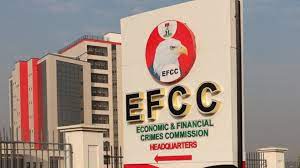
EFCC Arrests Suspect for Alleged Currency Racketeering in Enugu
Operatives of the Enugu Zonal Command of the Economic and Financial Crimes Commission (EFCC) have apprehended one Ekene Ibegbu in connection with an alleged currency racketeering scheme amounting to N1,580,000.A statement from the Commission disclosed that the arrest was made on Thursday, February 8, 2024, along the Owerri-Enugu Road, following actionable intelligence concerning Ibegbu’s suspected involvement in illegal currency activities.The suspect will face charges in court once investigations are concluded in line with the Commission’s commitment to combating financial crimes and ensuring the prosecution of perpetrators.Dele Oyewale, Head of Media & Publicity for the EFCC, confirmed the arrest in a press release.The EFCC continues to intensify efforts in its fight against corruption and illicit financial activities across Nigeria.Recently, the Commission formed a Special Task Force in all its Zonal Commands to enforce laws against currency mutilation and dollarization of the country’s economy.

Extra-Ordinary Ministerial Session of The ECOWAS Mediation And Security Council Calls for Unified Front.
The Ministerial-Level Extraordinary Session of the Mediation and Security Council (MSC) has underscored the need for commitment to the principles of democratic governance, and ensuring citizens’ freedom to elect their leaders remains intact. The meeting in Abuja, on February 8, 2024,is barely two weeks after three member states – Mali, Burkina Faso and Niger, announced their withdrawal from ECOWAS “with immediate effect”. Separate official notifications on January 29th, 2024 followed the initial joint communiqué signed by representatives of all three countries on 28th January 2024. Chairman of the MSC and Nigeria’s Minister of Foreign Affairs, Ambassador Yusuf Maitama Tuggar, therefore, described the meeting as crucial “to devise solutions to the challenges presented by these decisions” which have generated considerable concern across the region and beyond. Ambassador Tuggar added that as a Community, “we project not just our common values and a more attractive market. We also can deal more effectively with those shared challenges that go beyond national borders: climate change, violent extremism, migration and organized crime, to name but a few.”The Extraordinary meeting of the Mediation and Security Council at Ministerial Level is made up of Ministers of Foreign Affairs and Defence from ECOWAS Member States. Meanwhile, Dr. Omar Alieu Touray, the President of the ECOWAS Commission said the unfolding events in the Region are posing threats to peace and political stability in the West African community.He described the “hasty decision” as not having taken into account “the conditions for withdrawal of membership from ECOWAS, as espoused in the 1993 ECOWAS Revised Treaty” and the implications on the citizens.President Touray, however, expressed the belief that ‘’there is no challenge that ECOWAS cannot overcome and ‘’if there is a time for ECOWAS to stay together, this is the time.”

Illegal Mining: EFCC Nets 41 Suspects and 12 Trucks
The Ilorin Zonal Command of the Economic and Financial Crimes Commission (EFCC) has made significant strides in combating illegal mining activities, with the recent arrest of 41 suspects and seizure of 12 trucks allegedly involved in illegal mining operations.Acting on credible intelligence, the EFCC apprehended individuals found transporting truckloads of assorted minerals without the requisite licenses.The arrests, which occurred on Monday, February 5, 2024, spanned various locations including Share, Banni, Lade, Patigi, and Okolowo in Kwara State, as well as Igbeti and Ogbomosho in Oyo State.Previous efforts by the Command, in July 12, 2023, resulted in the conviction of a Chinese national, Gang Deng, and facilitated the final forfeiture of two trucks along with their mineral contents to the Federal Government. Dele Oyewale, Head of Media & Publicity for the EFCC, issued a statement on February 7, 2024 recalling a separate incident in which 13 Chinese nationals were arrested for offenses related to illegal mining activities.The EFCC emphasized its commitment to prosecuting the suspects in accordance with the law, stating that the individuals apprehended in the recent operation will be charged to court as soon as investigations are concluded.

EFCC Strengthens Vigilance on Currency Mutilation and Dollarization with Special Task Force
EFCC Strengthens Vigilance on Currency Mutilation and Dollarization with Special Task ForceNigeria’s anti-corruption agency, the Economic and Financial Crimes Commission, EFCC, has formed a Special Task Force in all its Zonal Commands to enforce laws against currency mutilation and dollarization of the country’s economy.The Commission said it has arrested perpetrators for issuance of invoices in dollars and mutilation of the Naira in Lagos and Port Harcourt.A press release made available to WAMAC disclosed that the Commission has invited proprietors of private Universities and other institutions of higher learning charging fees in dollars.According to the release, the Task Force, inaugurated by the Executive Chairman of the Commission, Ola Olukoyede, was raised to protect the economy from abuses, leakages and distortions exposing it to instability and disruption.The release signed by Head, Media & Publicity, Dele Oyewale gave assurance of EFCC’s commitment to the enforcement of all laws in place for the reflation and stimulation of the economy.

Germany and Nigeria Partner to Promote Regular Labour Migration
Germany and Nigeria have jointly established a Migrant Resource Centre in Ado, Nasarawa State aimed at promoting regular labour migration from Nigeria to Germany and other parts of Europe.German Federal Minister for Economic Cooperation and Integration Svenja Schulze who is on a visit to Nigeria opened the first Migration Resource Centre in Ado, Nasarwa State. ‘’ Migration is a reality that needs to be shaped so that it can benefit everyone, the people who migrate, the country of origin and the host community. Svenja Schulze, German minister for economic cooperation and development has said. The Centre has been operational since 2018 supporting young Nigerians on the importance of regular migration from Nigeria to Germany.Nigeria’s Minister of State Labour and Employment, Mrs Nkeruika Onyejeocha described the inauguration of the centre as a significant milestone in the partnership between Nigeria and Germany.She added that Nigeria faces challenges of illegal migration. ‘’ Due to the growing economic and demographic factors which suggest that we are in an age of growing migration pressures…”Nigeria looks forward to the promotion of labour exchange between her and Germany through bilateral labour migration agreements.

WAMAC’s Town Hall Calls for Reshaping Healthcare Integrity
In a significant stride against corruption, a Town Hall Meeting, (THM) attendees have made a compelling call for the Niger State Ministry of Tertiary Education to avoid granting approval or recognition to any College of Health and Nursing School that lack licensing from the pertinent Medical Regulatory Authorities. The meeting in Minna, Niger State was organized by Wadata Media and Advocacy Centre (WAMAC), with funding from the MacArthur Foundation. Zubair Abdurra’uf Idris, the Executive Director of WAMAC,emphasized the town hall meeting’s necessity, citing the declining state of healthcare in Niger State. Participants vehemently advocated against the politicization of health and education matters and urged the cessation of issuing business certificates without proper building permits. The gathering also called for closure of health institutions lacking essential personnel and facilities to prevent the emergence of under-qualified graduates and the spread of quackery in health centres. The THM on January 28, 2024 attractacted a diverse array of participants. agencies, and various stakeholders, resulting in a significant communique, highlighting resolutions to expedite the anti-corruption fight through community engagement.