

By Zubair Idris, Kuala Lumpur, Malaysia
Renowned investigative journalist Anas Aremeyaw Anas of Ghana’s THIRD EYE shared his insights on the existential threats to investigative journalism in Africa, particularly through data protection laws and cybersecurity acts.
In an interview with Zubair Idris in Kuala Lumpur, Malaysia, during the four-day Global Investigative Journalism Conference, which began on Friday, Anas emphasized the need for African countries to strengthen their democratic institutions to enhance good governance and accountability.
He emphasized that a thriving democracy is essential for investigative journalism to flourish, allowing journalists to hold those in power accountable without fear of intimidation or harassment.
Anas, known for his fearless and incisive reporting, highlighted the importance of an independent judiciary, a free press, and an active civil society in addressing the growing threats to investigative journalism in Africa, thereby promoting good governance and accountability.
He noted that when these institutions are weak, corruption and abuse of power can thrive, undermining the rule of law and democratic principles. Anas’ remarks are particularly relevant in the African context, where many countries continue to grapple with challenges related to governance, corruption, and accountability.
Confronting Threats to Investigative Journalism Through Stronger Legal Frameworks
To address these challenges, Anas advocated for increased support for investigative journalism and the protection of journalists’ rights. He also emphasized the need for African governments to implement policies and laws that promote transparency, accountability, and good governance.
“There are many lessons African countries can learn from Europe and other countries to perfect its democracy and accountability through Investigative Journalism”.
By doing so, African countries can strengthen their democratic institutions, promote economic development, and improve the lives of their citizens.
“Corruption and bad leadership are holding Africa back, and it’s time for governments to strengthen institutions and take a more pragmatic approach to tackle corruption”. Anas added.
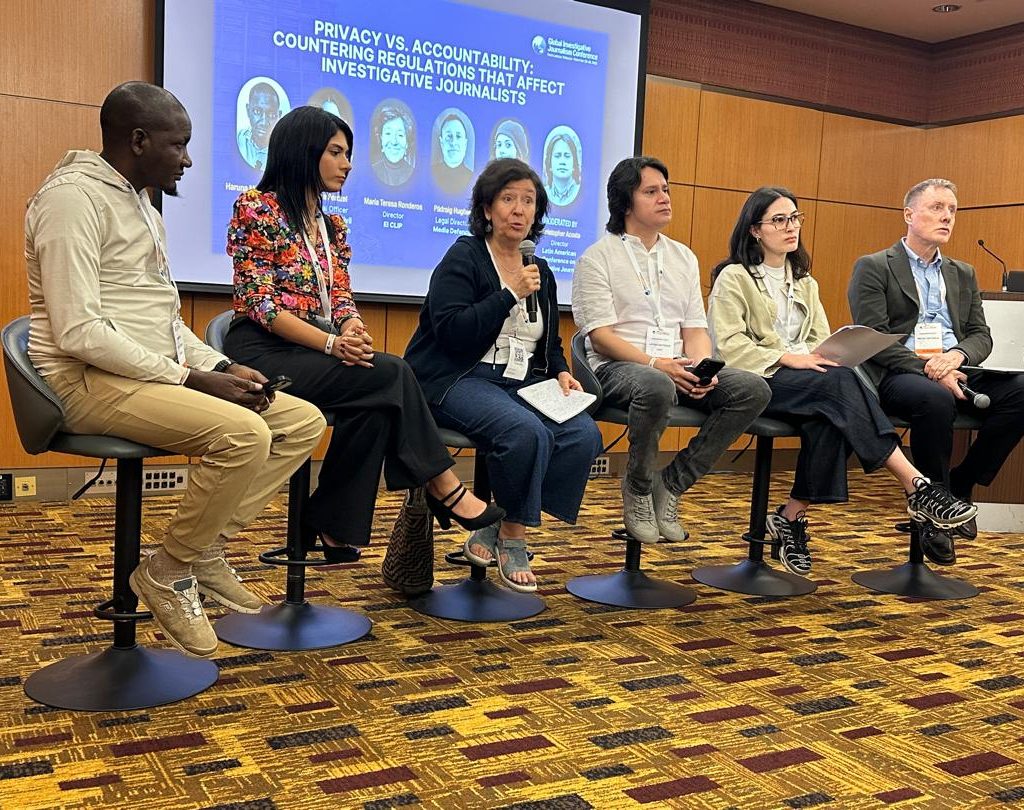
The four-day Global Investigative Journalism Conference, GIJC25, in Kuala Lumpur, Malaysia, is attended by 1,500 Investigative journalists from 97 countries, with several panel sessions, including one on “Privacy vs Accountability: Countering Regulations that Affect Investigative Journalism.”


