
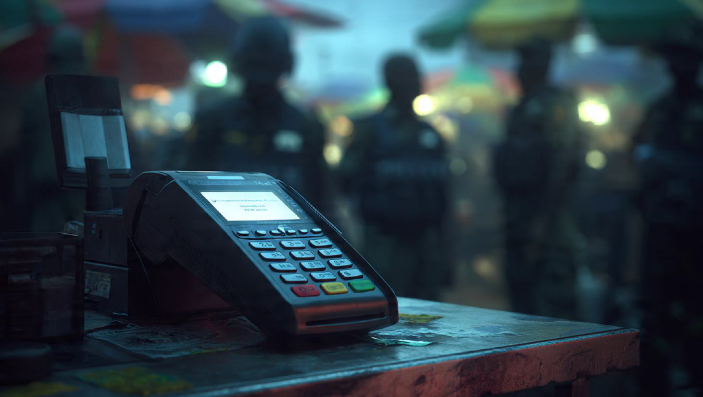
The alleged extortion of the ICPC Chairman by police officers in Abuja, Nigeria, became more than a disciplinary case. It prompted wider conversations about police accountability, public trust and the relationship between citizens and law enforcement.
Few stories captured Nigeria’s governance conversation in July 2026 as much as the alleged extortion of the ICPC Chairman, Dr. Musa Aliyu, SAN, by some police officers in the nation’s capital, Abuja. What began as an allegation involving ₦53,000 quickly evolved into a national conversation that extended far beyond the incident, raising broader questions about policing, accountability, and public trust.
According to the Federal Capital Territory (FCT) Police Command, four officers were arrested after the command received reports that they allegedly extorted the ICPC Chairman, prompting an investigation that quickly drew national attention.
While the allegation involved ₦53,000, the national conversation that followed extended far beyond the money. The incident raised broader questions about policing, accountability, governance and public trust.
From One Encounter to a National Conversation
For many motorists and commuters in Abuja, encounters with police checkpoints are part of everyday life. While many end without incident, others have been accompanied by complaints ranging from harassment and unlawful searches to allegations of extortion.
It was against this familiar backdrop that the alleged extortion of the Chairman of the Independent Corrupt Practices and Other Related Offences Commission (ICPC), Dr. Musa Adamu Aliyu, SAN, unfolded.
According to the Federal Capital Territory (FCT) Police Command, the complaint prompted an investigation that led to the arrest of four police officers. Speaking during a press briefing, Commissioner of Police Ahmed Sanusi addressed the allegations directly.
“We have about four policemen in custody as we speak… They extorted the Chairman of the ICPC.”
The Commissioner went on to outline the allegations in greater detail.
“They said ₦53,000. The man followed them gently. They took him to POS. He paid charges for the POS. They withdrew the money and shared it among themselves.”
— FCT Commissioner of Police, Ahmed Sanusi, describing how officers extorted the ICPC ChairmanHe further disclosed that the officers were allegedly operating outside their authorised duty post.
“That was not even their duty post. They are a gang of criminals left from various divisions, clustered together and moved to Wuse bypass and then created a checkpoint there.”
— FCT CP Ahmed SanusiAccording to the Commissioner, the officers were subsequently declared wanted before they were apprehended.
The Police response became an important part of the story. Rather than dismissing the allegations, the FCT Police Command publicly announced the arrests and an investigation.
Phone Searches: Drawing the Line Between Suspicion and Due Process
Beyond the disciplinary action against the officers, the case prompted the FCT Police Command to clarify an issue that affects many Nigerians: the circumstances under which police officers may search a person’s mobile phone.
Commissioner of Police Ahmed Sanusi stated unequivocally that officers are not permitted to stop members of the public during routine encounters and demand access to their phones.
“You cannot stop anybody on the road and ask the person to bring out his phone for search. If any policeman stops you and asks to search your phone, don’t agree. Call the police emergency lines and we will ask them why.”
— FCT CP Ahmed SanusiHe added that the Command had repeatedly instructed officers against conducting phone searches based solely on suspicion.
“It has been instructed that nobody should search any phone, especially when you just arrest somebody on the road because you suspect the person to be a ‘Yahoo Yahoo’ or so.”
At the same time, the Commissioner emphasised that mobile phones can legitimately form part of criminal investigations where due process has been followed.
“It has been instructed that nobody should search any phone, especially when you just arrest somebody on the road because you suspect the person to be a ‘Yahoo Yahoo’ or so.”
“This does not negate the fact that phones are also being used to commit crime. Before such a thing can happen, the person must have committed the crime, been properly arrested, and brought to the station.”
— FCT CP Ahmed SanusiThe distinction is significant. It addresses a question that has featured prominently in public discussions about policing in Nigeria: where does legitimate criminal investigation end and arbitrary roadside phone searches begin? According to the FCT Police Command, that distinction lies in due process rather than mere suspicion.
Speaking Up, Strengthening Accountability
The alleged extortion of the ICPC Chairman raises broader questions than the outcome of a single disciplinary case. It also highlights one of the most difficult aspects of police accountability: misconduct can only be investigated when citizens are willing and able to report it.
This broader institutional perspective was reflected in the response of Inspector-General of Police Olatunji Disu. Rather than suggesting that misconduct no longer exists within the Force, the Inspector-General acknowledged that policing, like every human institution, faces challenges. The real test, he argued, is not whether wrongdoing occurs, but whether it is confronted openly, investigated promptly and addressed decisively.
“We are a force that will not come out and lie to you that things are perfect… The most important thing is, what did we do about it?”
— Inspector-General of Police Olatunji DisuThe same message was echoed by FCT Commissioner of Police A.M. Sanusi. Explaining how the officers were identified and arrested, he stressed that the Command was able to act because the incident was reported.
“We were able to achieve this because it was reported to us. If you keep quiet out of fear of intimidation or further harassment, you will be undoing yourself. If you tell us, it will stop that fear and stop that intimidation.”
— FCT CP Ahmed SanusiInspector-General Disu also urged Nigerians to make use of the Nigeria Police Force’s Complaints Response Units (CRU) and other official reporting channels.
“If anything happens, ensure that you complain, so that we can act on it.”
— Inspector-General of Police Olatunji DisuThose appeals reflect the broader importance of accessible complaint mechanisms within police accountability systems. Complaints Response Units (CRUs) were established across state commands and the Federal Capital Territory as part of Nigeria’s police reform agenda. In their joint report, Corruption in Nigeria: Patterns and Trends (2024), the United Nations Office on Drugs and Crime (UNODC) and the National Bureau of Statistics (NBS) describe CRUs as mechanisms intended to improve the Force’s capacity to handle public complaints, including reports of unlawful demands for money, police misconduct, extortion and abuse of authority. The report notes that they are also intended to reinforce discipline and support a more credible and transparent oversight function within the Nigeria Police Force.
Through its official Complaints Response Unit (CRU) portal, members of the public can submit complaints, monitor the progress of their cases and report anonymously. The Unit also provides updates through its official CRU X account.
At the time Afrobarometer conducted its Round 10 survey, only 10 per cent of respondents believed that ordinary people could report corruption without fear of retaliation or other negative consequences, highlighting a significant confidence gap in public reporting mechanisms.
Together, the Police leadership’s appeals and the Afrobarometer findings expose one of the central challenges confronting accountability in Nigeria. Effective oversight depends in part on citizens reporting wrongdoing. Afrobarometer’s Round 10 survey, however, found that only 10 per cent of respondents believed that ordinary people could report corruption without fear of retaliation or other negative consequences.
One Uniform, One Reputation
While individual officers serve in different commands and formations, the reputation of the Nigeria Police Force is shaped not only by the cumulative conduct of its officers but also by the consistency with which misconduct is addressed. Alleged misconduct in one command can diminish public confidence far beyond the community where it occurred. Conversely, credible investigations, transparent disciplinary processes and appropriate sanctions can strengthen confidence in the institution as a whole.
To understand why the alleged extortion of the ICPC Chairman resonated so strongly, it is also necessary to look beyond a single allegation and examine what recent research says about corruption, policing and public confidence in Nigeria.
According to Afrobarometer’s Round 10 survey, 67 per cent of Nigerians who sought police assistance during the previous year said they had to pay a bribe to obtain that assistance. Among those who encountered the police in other situations, such as checkpoints, traffic stops or investigations, 53 per cent said they paid a bribe to avoid problems.
These figures do not suggest that every police officer engages in corrupt practices. They do, however, reveal a significant trust deficit between many Nigerians and one of the country’s most visible public institutions.
The challenge extends beyond perceptions captured in surveys. Amnesty International’s 2026 report on the Tiger Base police unit in Imo State, South East Nigeria, documented concerns showing how allegations of police misconduct can extend beyond corruption to include serious human rights issues. The organisation documented allegations of extortion, torture and other abuses, including the use of Point of Sale (POS) terminals to extract what it described as “lucrative bribes”.
Although the findings relate to a different police command and are not connected to the alleged extortion of the ICPC Chairman, they underscore a broader institutional reality: the conduct of officers in one command can influence public confidence in the Nigeria Police Force as a whole.
Taken together, findings from Amnesty International, Afrobarometer, and the UNODC/NBS report provide important context for understanding why allegations of police misconduct attract attention beyond individual disciplinary cases.
The Enduring Lesson: Looking Beyond ₦53,000
As July 2026 draws to a close, the alleged extortion of the ICPC Chairman has become more than a story about ₦53,000. It has prompted wider conversations about police accountability, public trust and the relationship between citizens and law enforcement. In doing so, it has also highlighted the shared responsibility of institutions and citizens in strengthening accountability.
The Nigeria Police Force has consistently encouraged members of the public to report alleged misconduct, which the FCT Police Command said was demonstrated in this case. Inspector-General of Police Olatunji Disu and FCT Commissioner of Police Ahmed Sanusi have both urged Nigerians to use the Force’s Complaints Response Unit (CRU) and other official reporting channels.
One uniform carries one reputation. Public confidence is strengthened when citizens feel able to speak up, and institutions respond fairly, transparently and consistently. That may prove to be the most enduring lesson from a case whose significance extended well beyond the amount allegedly involved.
